Your Pool Might Be the Reason Your Teeth Are Changing
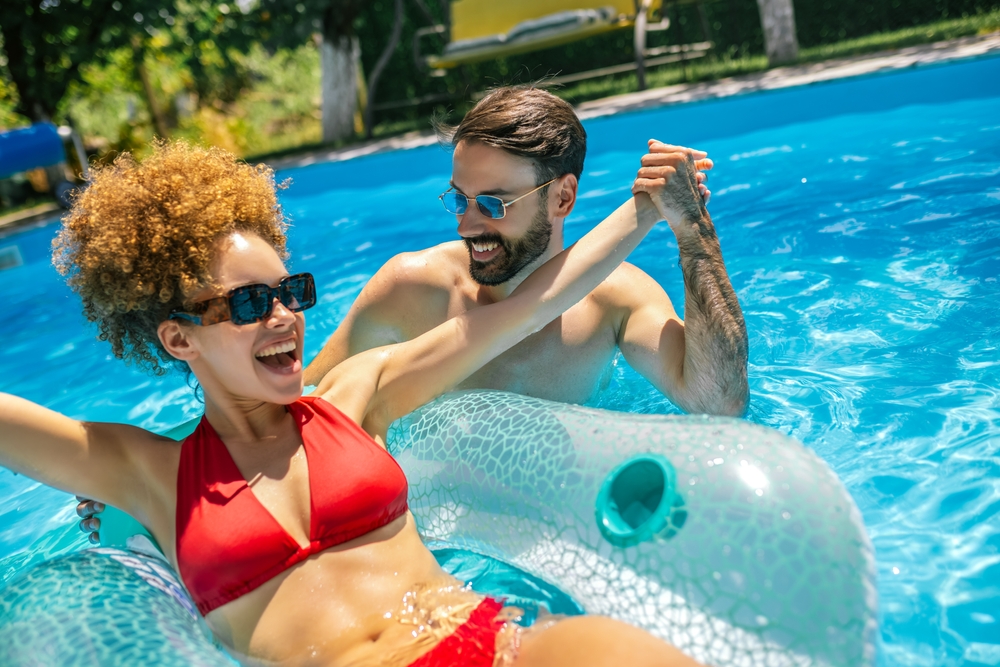
Swimming is one of summer’s best activities — but spending hours in the pool each week can quietly change your teeth. Pool water chemistry, especially pH, plays a direct role in enamel health. When water is too acidic, it can gradually wear down enamel, leaving frequent swimmers more prone to sensitivity, rough spots, and staining.
If you’ve noticed sensitivity, roughness, or discoloration and you spend a lot of time in the pool, it’s worth having it looked at. Call New Image Dental LTD at (630) 837-0887 to schedule an evaluation with Dr. Brian J. Fitz, or book online in a couple of minutes.
The Science Behind Pool Water and Tooth Enamel
Tooth enamel is the hardest substance in the human body, but it has one real weakness: acid. When pool water’s pH drops below 7.0 (neutral), it turns acidic. Pools are supposed to stay in the 7.2–7.8 range, but that slips more often than most pool owners realize — especially during heavy use or after a hard rain. Once pH falls out of range, the water can start pulling minerals out of your enamel through a process called demineralization.
Swimmers who spend two or more hours a day in the pool over a season can see measurable enamel loss. That’s not a concern for the casual weekend swimmer, but it matters for competitive swimmers, water aerobics regulars, and anyone using a pool daily.
Swimmer’s Calculus: The Staining Problem Most Swimmers Don’t Know About
Beyond enamel erosion, frequent swimmers can develop swimmer’s calculus — a form of tartar buildup that shows up as brown or dark yellow staining, usually on the front teeth. Unlike coffee or wine stains that sit on the surface, swimmer’s calculus forms when pool chemicals react with proteins in saliva, causing them to deposit onto tooth surfaces unusually fast.
It tends to show up on the upper and lower front teeth first, and it can be stubborn. In-office cleanings can remove it, but for daily swimmers, it can build up faster than a twice-a-year cleaning schedule can keep pace with.
“The hygienist removed these hideous ugly stains from my teeth in 5 minutes like whaaat? I love this place.” — Doose I., patient at New Image Dental LTD
If Dr. Fitz notices this kind of staining at a checkup, it’s often one of the first signs that a patient has been spending significant time in chemically treated water.
Signs That Pool Water May Be Affecting Your Teeth
Some of these overlap with other dental conditions, which is exactly why it’s worth mentioning your swimming habits at your next visit. Common signs include:
- Increased sensitivity to cold, heat, or sweets — a sign enamel may be thinning
- A rough or chalky feel on the tooth surface, especially the front teeth
- Brown or yellowish staining on the front teeth that wasn’t there before swim season
- Teeth that look slightly more transparent at the edges (a hallmark of enamel erosion)
- A dry-mouth feeling after swimming, which reduces saliva’s natural buffering effect
Who Is Most at Risk?
Not every swimmer faces the same risk. Pay closer attention to your oral health during pool season if you’re:
- A competitive swimmer training for extended periods daily
- A child or teen whose enamel is still developing
- A water aerobics participant with long, frequent sessions in the pool
- Someone with existing enamel erosion, dry mouth, or acid reflux
- A private pool owner who isn’t testing and adjusting pH as often as commercial pools are required to
What You Can Do to Protect Your Teeth This Summer
The good news: you don’t have to choose between your swim routine and your smile. A few habits make a real difference.
Keep Your Mouth Closed in the Water
The less pool water that touches your teeth, the better — especially when swimming laps with your face submerged repeatedly. Simple, but it matters.
Rinse With Water Immediately After Swimming
A thorough rinse with clean tap water right after you get out dilutes and clears chlorinated water off your teeth before it keeps working on your enamel. Make it a habit every time.
Wait 30 Minutes Before Brushing
Right after swimming, your enamel is temporarily softened by acid exposure, and brushing immediately can wear it down faster. Rinse, wait at least 30 minutes, then brush with a fluoride toothpaste.
Use a Fluoride Toothpaste — and Ask About a Fluoride Rinse
Fluoride helps remineralize enamel. If you swim frequently, Dr. Fitz may recommend a prescription-strength fluoride product or a daily fluoride rinse for extra protection through the season.
Stay Well Hydrated
Swimming is dehydrating, and a dry mouth means less saliva — your first line of defense against acid. Drink water before, during, and after your swim to keep saliva flowing.
Test Your Pool’s pH Regularly
If you own a pool, get a reliable pH testing kit and check levels at least twice a week during peak use. Target range: 7.2–7.8. It protects your teeth and your pool’s equipment.
Schedule More Frequent Cleanings
If you swim competitively or daily, consider a mid-season cleaning at New Image Dental LTD in addition to your standard twice-yearly visits, so Dr. Fitz can catch early signs of enamel erosion or swimmer’s calculus before they become a bigger fix.
What About Saltwater Pools?
Saltwater pools are often marketed as gentler than traditional chlorinated pools, and they do tend to feel softer on skin. But saltwater pools still use chlorine — they generate it on-site through electrolysis instead of adding it directly. The pH dynamics end up essentially the same, and the dental risks for heavy swimmers are comparable. Switching to saltwater isn’t a fix for swimmers’ dental concerns; the same protective habits still apply.
Talk to Dr. Fitz Before Summer Gets Into Full Swing
Whether you swim for fitness, competition, or fun, protecting your enamel matters just as much as caring for the rest of your body. Regular exposure to chlorinated water adds up over time, especially for frequent swimmers and athletes.
Dr. Brian J. Fitz has been practicing general and cosmetic dentistry in the Streamwood area for over 30 years. He’s a graduate of the University of Illinois College of Dentistry, where he received the Stanley D. Tillman Award for rendering complete oral treatment of the highest quality and an award for Outstanding Clinical Achievement in a Comprehensive Patient Care Program. He holds memberships in the American Dental Association, Chicago Dental Society, American Academy of Cosmetic Dentistry, American Academy of Implant Dentistry, American Academy of Dental Sleep Medicine, International Congress of Oral Implantologists, and International Dental Implant Association.
Two more notes from longtime patients, for context on what a visit here is like:
“New Image Dental has been providing dental care for my family for 30 years. Never disappointed!! Dr Fitz is personable and professional. An outstanding dentist!! … Teeth are spotless when I leave.” — Bruce C.
“I was visiting my family from out of town when my crown came loose. Dr. Fitz was able to get me in the morning I called to exam me. He was extremely professional, gentle and thorough.” — Amanda Z.
See more on our Patient Reviews page.
Schedule Your Visit
Dr. Fitz can evaluate your enamel, spot early signs of chlorine-related wear, and recommend simple, personalized steps to protect your smile all season long.
Phone: (630) 837-0887 Book Online: Appointment Portal Address: 945 S. Bartlett Rd., Suite A, Streamwood, IL 60107 Email: contactus@newimagedentalltd.com
Related pages: